
FIND YOUR HYPERION
Sizing & materials
Choose the fit and finish that feel right for the way you hoop.
Measure the inner diameter
All Hyperion hoop sizes are measured by inner diameter (ID): from inside edge to inside edge.
| Hoop tubing | Convert outer diameter (OD) to ID | Example: 35-inch OD |
|---|---|---|
| 3/4 inch | Subtract 1.5 inches | 33.5-inch ID |
| 5/8 inch | Subtract 1.25 inches | 33.75-inch ID |
We offer sizes in half-inch increments. For a calculated 33.75-inch ID, choose either 33.5 or 34 inches when ordering.
Matching a SpinFX Phoenix? Those hoops were measured by outer diameter. Subtract 1.5 inches from the SpinFX size when ordering a Hyperion Phoenix to match it.
Buying a gift for an experienced hooper? Measure their favorite hoop by inner diameter. Take at least two measurements, since hoops are often not perfectly round.
A rough guide to hoop sizes
These are very rough guidelines for an average body type. Personal style and experience matter as much as size.
| Inner diameter | Typical use |
|---|---|
| 22–25 inches | Minis, often used in pairs. Mostly off-body work, except for very advanced hoopers. |
| 26–29 inches | Small and fast; favored by advanced hoopers. |
| 30–33 inches | Our most popular range for intermediate to advanced hoopers. |
| 34–36 inches | Beginner to intermediate; also popular with circus performers. |
| 37–40 inches | Beginning hoopers or larger body types. |
And 60 inches? Giant, good for tandem hooping. We have two. You can’t have them.
Room to grow into a smaller hoop
Beginning hoopers often move to smaller sizes quickly. The original 3/4-inch Hyperion includes one free downsize, making it an option if you expect to want a smaller hoop later. Hyperion Lite and Hyperion Phoenix do not include a free downsize.
Paid resizing services are available. Phoenix service pricing differs because its internal battery wiring is more complex. See the return instructions before sending your hoop.
Choose your tubing
HDPE
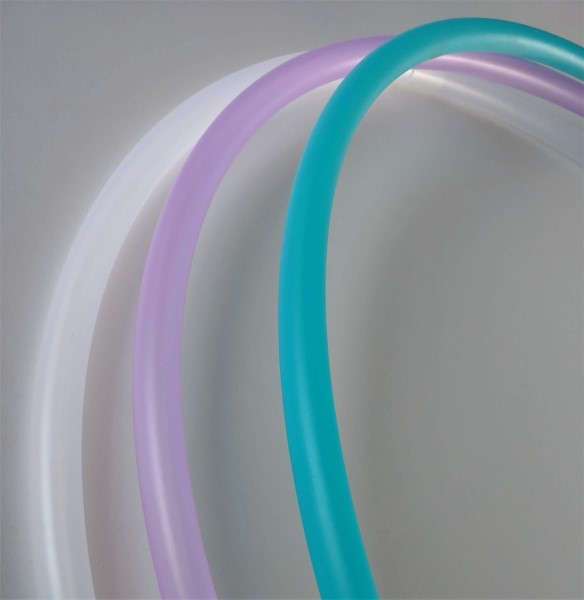
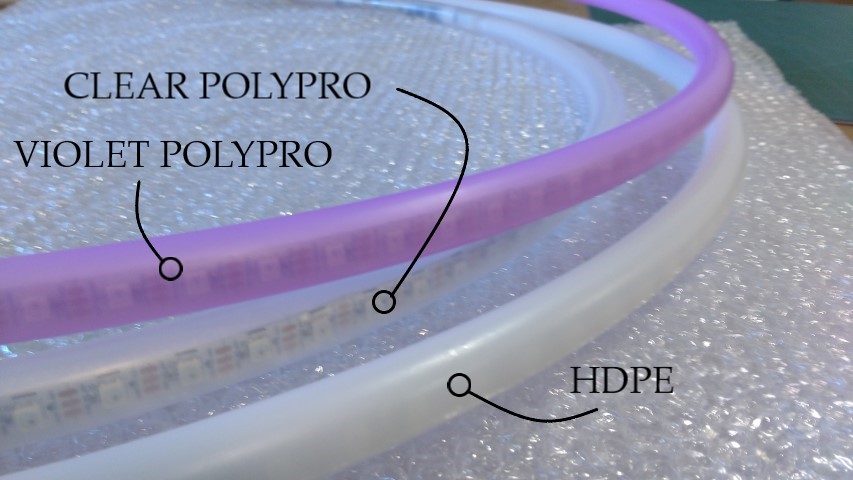
High-density polyethylene tubing is milky white, diffused, moderately stiff and durable. It is the same type of plastic used for milk jugs. Small scratches can be sanded and buffed out.
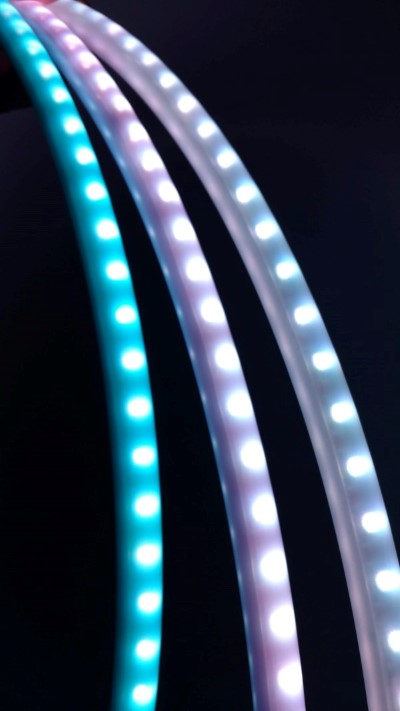
HDPE softens when hot but handles cold better than polypro. It can kink, but is very resistant to cracking and shattering. LEDs have a slightly diffuse glow and the internal parts are mostly concealed. HDPE is not available for 5/8-inch hoops.
Clear polypro
Polypropylene tubing is clearer and springier than HDPE. LEDs appear as brighter, more distinct points with less diffusion. Polypro is slightly lighter than HDPE and is generally tough, but it tolerates cold less well and can crack at low temperatures. It is more prone to cracking and shattering than HDPE at all temperatures.
Aquamarine & violet polypro
Colored tubing makes the hoop stand out during the day. It adds a minor tint that may be noticeable on white patterns. The effect is fairly subtle in the dark: all LED colors still come through.